


In my last post, Epic answered the SaaSpocalypse with Connectors. But as I alluded to, that’s only one way to solve the problem - the neighboring kingdoms have been building gates of their own. athenahealth and eClinicalWorks have both shown their MCP plans. One looks a lot like Epic’s. The other went the opposite direction.
Workbench Warriors
eClinicalWorks unveiled AI Workbench at its National Conference a few weeks ago. While it’s also still cloaked in mystique, it does structurally resemble Verona’s Agent Factory. Customers get:
An agent builder framework
An Agent Store of prebuilt agents and flows
A roster of eCW’s own named agents: Scouty (value-based care), Profy (RCM), Mochi (email and scheduling), Sparky (urgent telephone encounters), and Clara (prior auth)
eCW also says:
Building on standard integrations such as REST and FHIR APIs, eClinicalWorks is also introducing support for Model Context Protocol endpoints in AI workbench, enabling organizations to connect their own applications and workflows to the eClinicalWorks platform.
However, reading between the lines a bit, there are traces of strategic divergence. For instance:
Yes. Depending on the integrations and access configured for your organization, AI Workbench can connect workflows across the EHR, payer portals, documents, Microsoft 365, and other business applications.
In Epic’s model, payers or clearinghouses would ostensibly register their MCPs in Agent Factory Marketplace, but that depends on the payer showing up. eCW’s word choice here (“portals” rather than “APIs” or “clearinghouses”) intimates agents working a UI the way a human would. If so, eCW is edging toward the computer use and RPA strategy I speculated about last time, where the system of record goes out beyond the walls itself to get the data, hell or high water.
Patient Zero
athenahealth appears to have taken a very different path on agents generally. Thus far, there’s no Agent Factory equivalent (although I risk being immediately out-of-date as their national conference, Thrive, is ongoing as we speak). Yes, athena builds its own agents into athenaOne, from patient texting and self-scheduling to prior auth voice calls and care gap outreach, but it lets everyone else’s in through its existing Marketplace.
In that Marketplace, I did notice something out of the ordinary last week:

Well, today we found out more, as athenaPatient MCP officially launched for Claude (sitting here). Patients add the connector, sign in with their athena portal credentials, pick a practice, and uncheck any data types they don’t want to share.
It’s undoubtedly cool! But remember - patients can already pull their records into third-party apps through certified FHIR USCDI APIs. From yesterday:
…often MCP servers are just wrappers over existing APIs.
That does appear to be what this is:
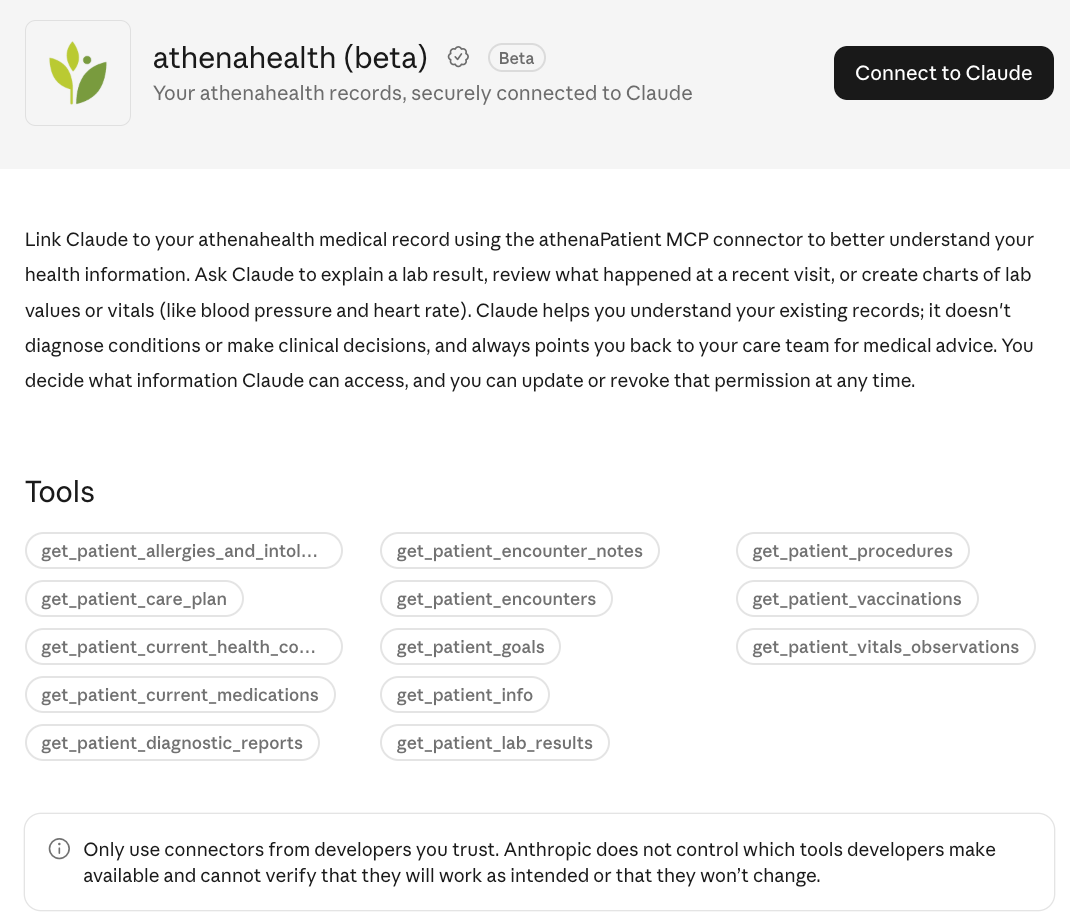
Introspecting the authentication page that launches from that “Connect to Claude” button:
The MCP server sits behind athena’s existing SMART on FHIR authorization server
The token audience is athena’s FHIR R4 endpoint
The scopes are the standard stuff (patient launch set and the 16 USCDI read-only resource scopes)
The one addition is a (very cool) custom scope, athena/user/Fhir.MCP.Patients.*, granted to a client registered with a claude.ai redirect.
I tried adding the server to ChatGPT as a custom connector, but it failed immediately, as the server doesn’t publish the Protected Resource Metadata the MCP authorization spec expects. Claude with a preregistered client works, but any other chatbot or harness doesn’t.
It raises the question - why Claude alone and not an open MCP server? While it’s easy to slip into speculation about backroom deals and exclusivity economics, the press release lightly signals more hosts are coming:
Today’s launch with Claude is just the beginning. athenahealth is committed to responsible AI integration, and this marks the next step toward a future in which patients can use AI tools to better understand their records, prepare for care decisions, and engage more fully in their health.
The more likely explanation is inertia (and perhaps a touch of patient privacy). Patient apps already have to register before touching athena’s (g)(10) FHIR API. So rather than rock the boat and do something different (that normal patient apps may also want for their integrations), Claude auths the same way, skipping the MCP features that let any host connect on the fly. All-in-all, it’s a reasonable path on day one, but let’s see how long it takes to cut a second key.
Booked Solid
But hey - there’s more! athenaOne MCP is the provider-side equivalent, planned for Q1 2027 with an alpha signup open now. The first use case is scheduling only:
Get patient ID given provided demographics
Get patient demographics for a specific ID
Book a patient appointment
Get a list of appointment reasons
Get a list of available departments
Get a list of providers
Get a list of available filtering options when searching for providers
Get a list of available appointments
Reschedule an existing appointment
Get a list of a specific patient’s appointments
Get information about a specific appointment
Cancel an existing appointment
Get a list of appointment cancellation reasons
It’s a tiny subset of the proprietary APIs in the massive athenaOne catalog, but scheduling first is sensible. It’s the first integration nearly every AI front-door and voice agent startup needs.
It’s clear they’re being thoughtful about MCP design (at least here). athena says:
Tools can support entire workflows, obfuscating the complexity that comes with compiling individual actions and enabling faster delivery
That addresses the variance problem I flagged last time. If you’re going to invest into MCP, do cool new things beyond your API and design with the agent as a new persona!
Notably, this athenaOne MCP is aiming for roughly the same clock as Epic, whose Connectors page also aims for the end of Q1 2027. HTI-6 hangs over both, so I wonder how that bombshell regulation will shape MCP roadmaps in the future.
The MCP Strategy Credit
The more I look at it, both the patient and provider MCPs are strategy credits:
Strategy Credit: An uncomplicated decision that makes a company look good relative to other companies who face much more significant trade-offs.
EHRs offering MCP over existing APIs is cheap when you’ve already figured out data access. athena opened up far more than any competition years ago! Its own agents already compete with outside ones via the many APIs they’ve invested in. Wrapping those in MCP adds almost no new exposure.
On the other hand, for EHRs with less of a foundation to build on, tradeoffs abound. Do you skip the APIs altogether and risk betting on a standard that’s still settling? Do you instead ship APIs, both appearing the laggard and also handing outside agents the same access your own agents are just starting to use? Tougher sledding
Warming the Bench
It may feel like I’m going full Vince Carter, dunking on every EHR’s agent and MCP strategy one by one. But every vendor I’ve critiqued so far is at least in the game! For contrast, the other big inpatient kingdom, Oracle Health, is still warming the bench (for now) when it comes to agentic ecosystem building.
Frustratingly, last month Oracle did announce an Agent Factory lookalike, AI Agent Studio for Industry Applications, complete with a builder and a catalog of agents and MCP servers. The supported industries are broad, spanning construction to utilities to restaurants, yet healthcare isn’t one of them. Instead, Oracle Health is pouring its investment primarily into its own apps:
Clinical AI Agent continues to expand into new workflows, with coding, dictation, chart review, and nursing all recently announced.
On the patient side, Oracle took the opposite approach from athena: its AI patient portal answers questions inside Oracle’s own app.
I’m not sure I want any precious interoperability investment from them to go to MCP, either (at least to start)! While the Cerner Millennium APIs go beyond the regulatory floor for a few workflows, they haven’t gained new capabilities this year. Meanwhile, the APIs for the new Oracle Health EHR stop at USCDI reads. The developer community would appreciate greater investment in the APIs themselves, especially write access. An MCP server wrapped around USCDI reads would only wrap the existing, quite limited floor.
It’s shocking to me the heat that EHRs like Epic and eClinicalWorks catch for trying, while vendors doing far less draw almost none. Opening the gate the wrong way is a fair critique. Never opening it probably should be a louder one.
Letters to the Kings
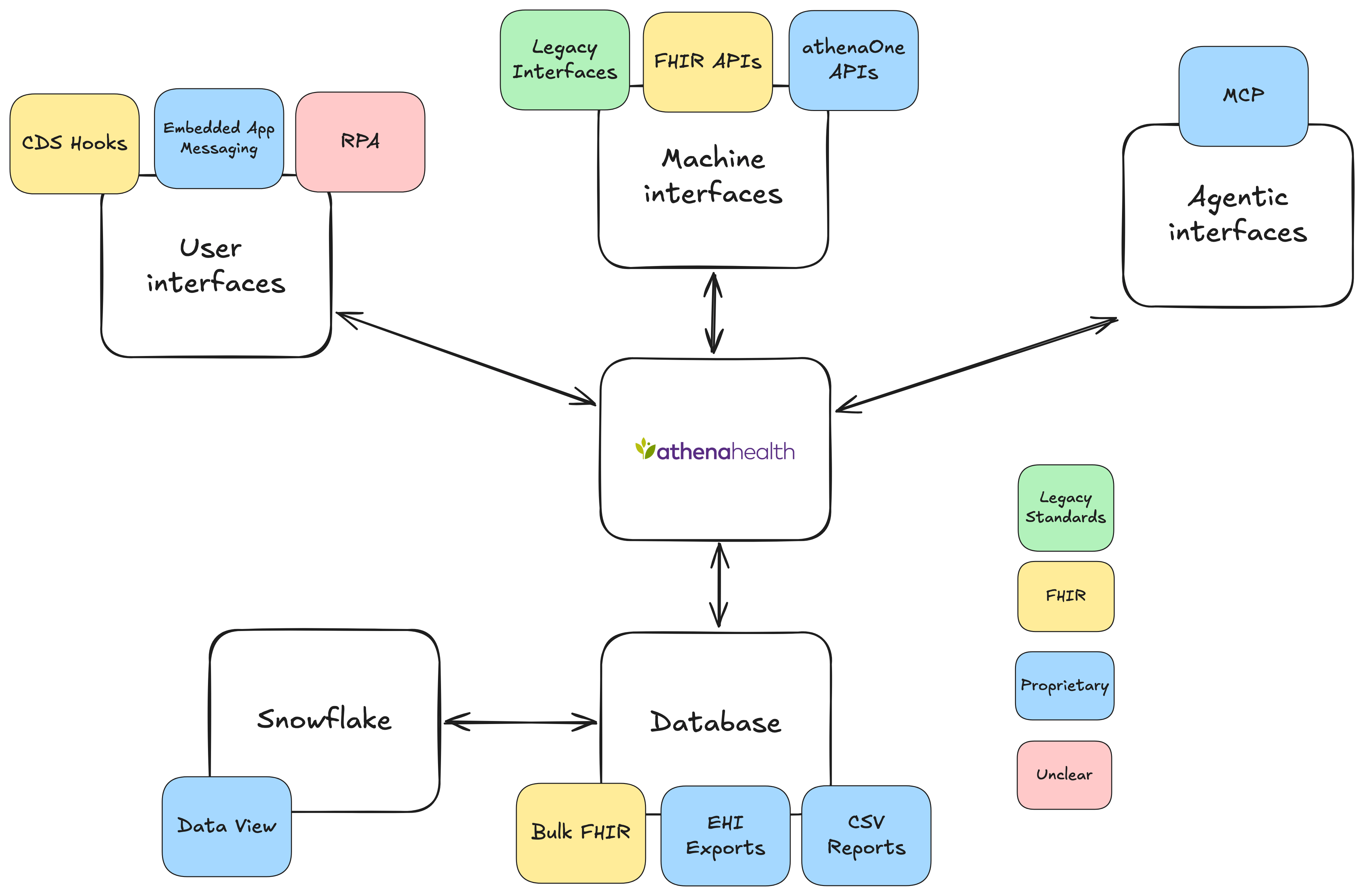
Taken all together, we’re finally seeing EHRs fill in the mysterious box I labeled “Agentic Interfaces” in my EHR Access Diagrams series. Back then, I wrote that neither Epic nor athena had released anything formal there. Five months later, both have. Things are moving fast!
So where does it all land? From a pure play “what would I recommend to each CPO” perspective:
Agent Builders: So long as EHRs’ provider customers want to build agents, which it seems they do, the systems of record should be making this investment
MCP Marketplace: Once an agent builder is on the roadmap, how you connect to the outside world becomes paramount.
Full-bore RPA offers maximum reach, but invites an arms race (and CFAA risk) with every system it logs into.
I’m very bullish on the MCP marketplace approach! Sure, it has nice value capture potential, but more importantly (and underratedly) than that, it promises drastically faster implementations, where customers can simply switch on a vetted server instead of building heavy outbound integrations from scratch.
Patient MCP: Build it. It’s not revolutionary, but it’s optically positive and, as I argued in MyChart Central Grows Up, whatever your patient app/assistant can do should be available through API or MCP. Agents will scrape the UI for those capabilities otherwise, so you may as well give them a paved path.
Provider MCP: If your APIs are already broad, wrapping them is cheap publicity and a hedge against information blocking risk, a case I made over a year ago. If they aren’t, well, you gotta fix that first.
The end state is probably a bit of all the above, at least for mature platforms. However, there’s one agentic ecosystem category none of these EHRs has touched yet. As this newsletter has argued quite repetitively before, even with every API and MCP server above, third-party agents will still work the UI for whatever those don’t cover.
RPA is still legally, if not technically, blockable in most verticals, but the calculus is different in healthcare compared to other industries, thanks to information blocking. A court already found via preliminary injunction and appeal that PointClickCare’s CAPTCHAs were likely information blocking. PCC has since opened authorized pathways while banning unsanctioned bots, presumably betting that offering a sanctioned route is what makes closing the others defensible. I’m surprised more vendors haven’t mimicked that move prophylactically: knighting the bots themselves. That lets the EHR set the terms instead of playing cat and mouse.
The kingdoms have spent this fall deciding which way their front gates swing. Sooner or later, they’ll have to decide what to do about the side door, because the agents are already using it.
Month in Review
Author’s note: Although articles are written sans AI, the brief summaries below are LLM-assisted.
Articles Published
None this month
Video Content
The Information Exchange: Agents Behaving Badly (Oct 9): Brad, Bryan, Pryce, and I get into the CDC’s hunt for a public health data intermediary and my pitch for an agentic network with dumb pipes and smart endpoints. We also cover personal agents like Instinct and Muse (and who they actually work for) before closing on Utah letting AI prescribe.
The Information Exchange: Meat Raffle Rules (Oct 30): Ryan takes the host chair (and the mute button) for an Open@Epic edition of Around the Horn with Bryan and first-timers Evan and Tyler. They debate whether Agent Factory Connectors are threat or opportunity, the open.epic MCP server, FHIR notifications, and the freshly finalized HTI-5.
Regulatory
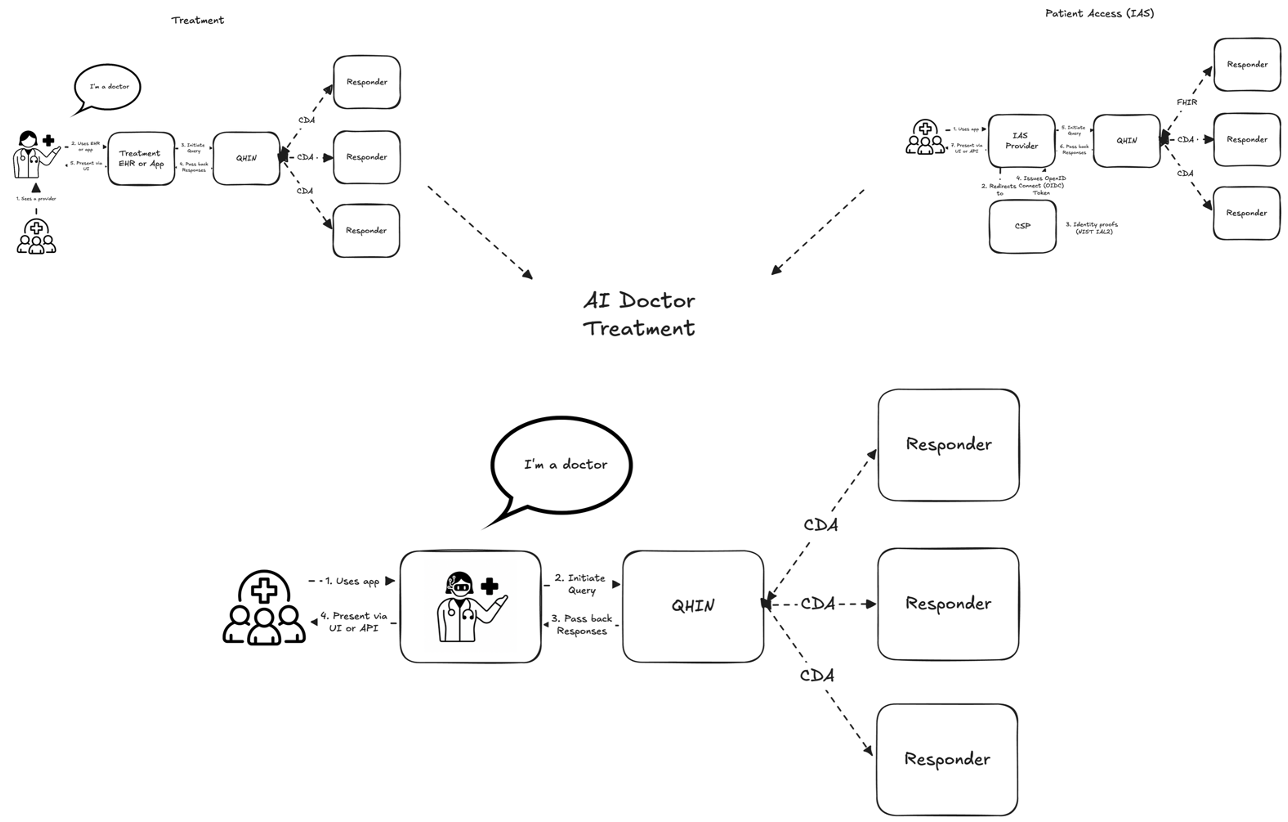
Medical License to Query (Oct 27): Written late (and live) from the eHealth Exchange and Sequoia Annual Meeting, a short provocation on what happens when AI doctors inherit the Treatment and IAS keys. Before the bots get national query reach, someone should decide what makes them eligible.
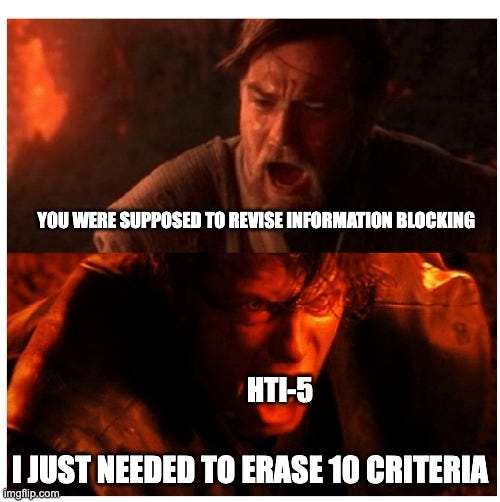
HTI-5: Appetizers Suck (Oct 28): The final rule cut 14 certification criteria instead of 34 and dropped every information blocking change, punting the meat to HTI-6. The consolation prize: MCP, in the Federal Register.
Court cases

Hull v. Epic: Waiving the White Flag? (Oct 5): With Veeva helping pay her lawyers, Hull turns down Epic’s one-person surrender and asks for the whole fortress, adding PAGA claims on behalf of every California employee. The new filings also put a motherlode of Epic’s own labor paperwork into public view.

An OpenEvidence v. Doximity Obituary (Oct 19): Health tech’s messiest AI lawsuit ends with a whimper, so it gets a proper eulogy. The autopsy runs through a CEO’s vanished Signal messages and a public company’s engagement metrics; in lieu of flowers, check your Slack retention settings.
EHRs

Epic’s Emu War? (Oct 14): Heidi’s AI agents are logging into Australian GP software as the doctor, around license terms written to forbid exactly that. Ned Kelly, the Uber playbook, and why Epic’s Australian hospitals will be a harder fight than the outback’s small practices.
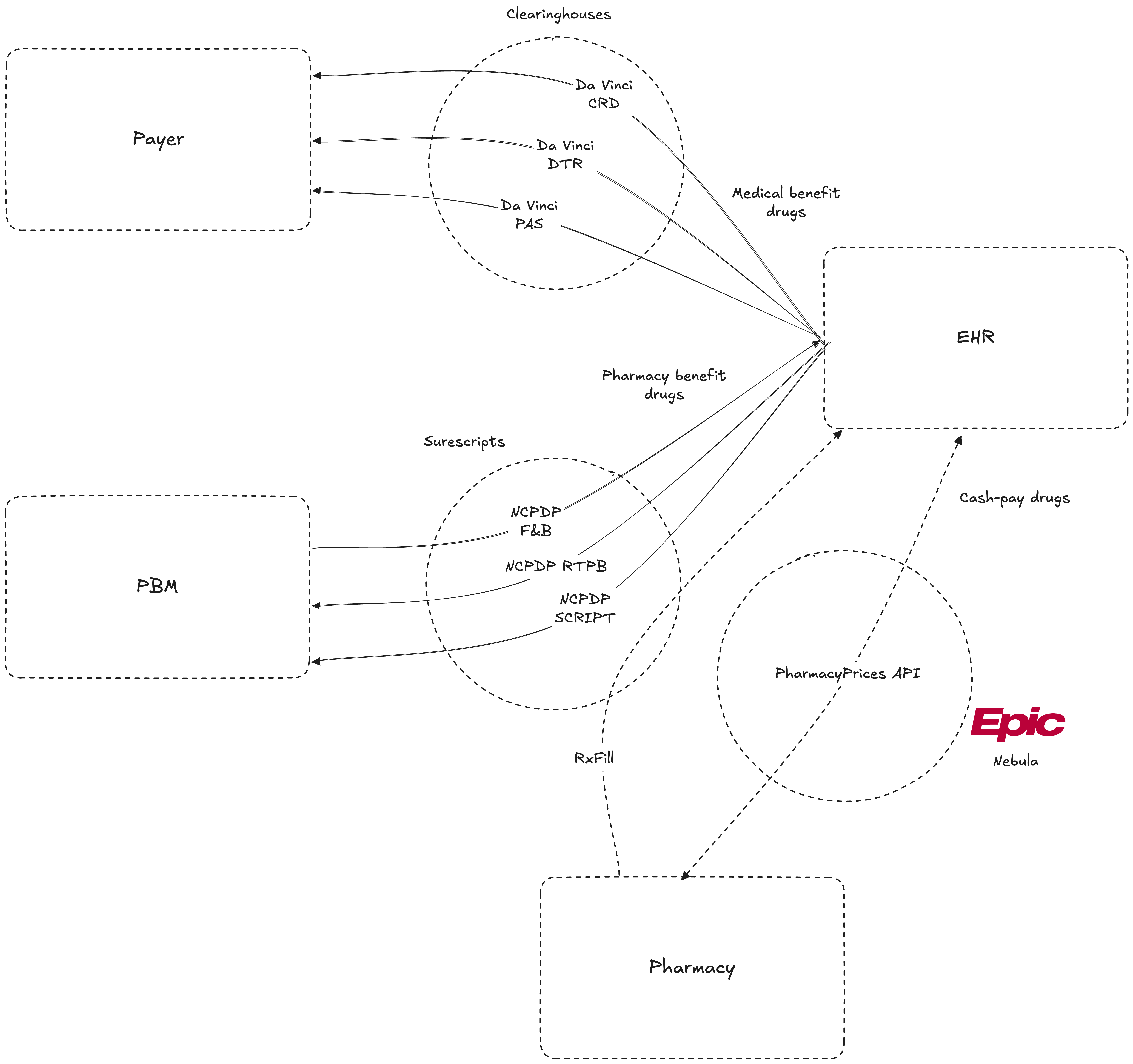
Rx Marks the Spot (Oct 16): Eight months after Surescripts killed its GoodRx pilot, Epic launches Prescription Marketplace with Cost Plus, Amazon, Costco, and LillyDirect. The API spec reveals a deft beachhead: Epic builds its own network over Nebula while routing fill confirmations back through NCPDP rails.
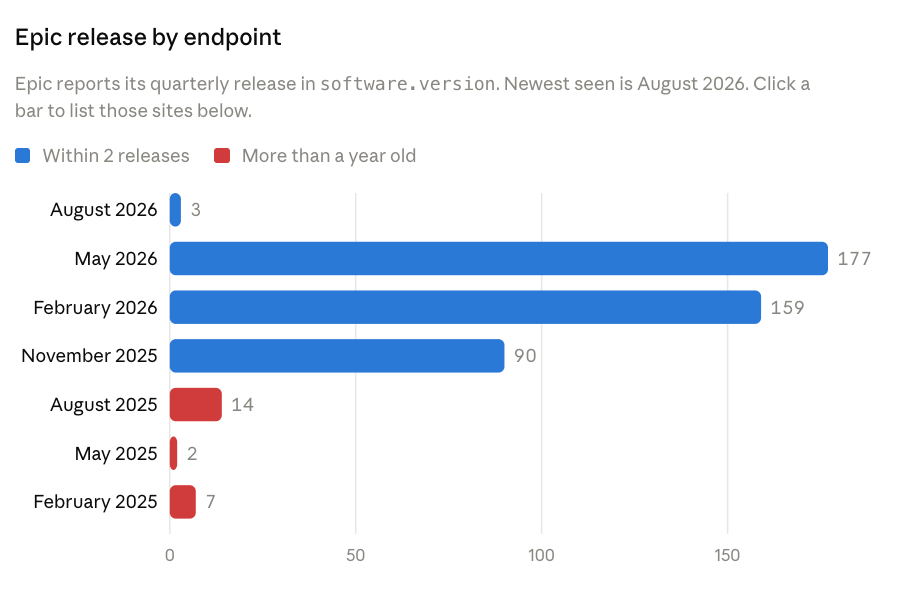
Your Version Is Showing (Oct 20): Federal law makes every certified EHR publish its customers’ FHIR endpoints, which turns a few cURLs into free market intelligence. Epic alone reports real version numbers, making its directory an upgrade report card (95% of servers run a release from the past year).
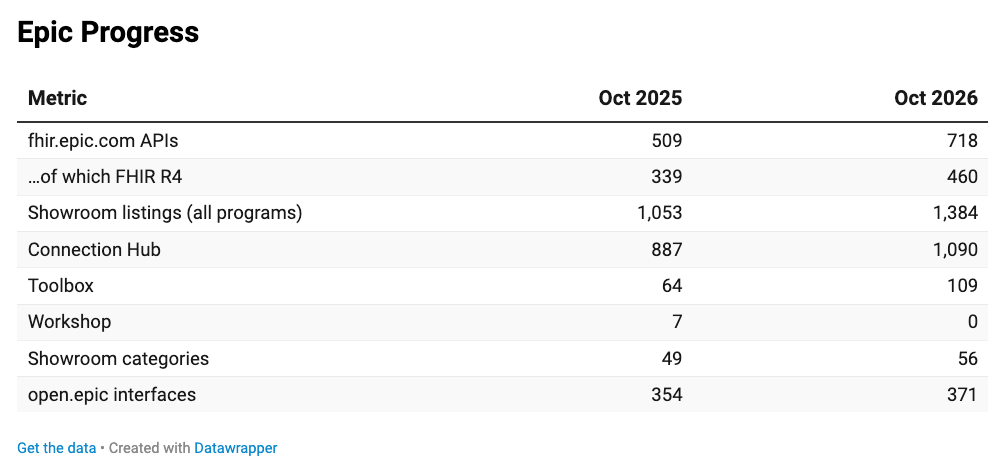
Beware the Kingmaker’s Curse (Oct 21): Written on Open@Epic day, a modest proposal: Epic should publish every API spec and keep charging for access exactly as it does today. Salesforce and Veeva show how a platform loses a market by crowning winners, and gated docs do a weaker version of the same.
Industry Analysis

The Slop Power Rankings (Oct 6): A (patent-pending) formula scores AI slop by who gets stuck with the bill. Deckslop, codeslop, and contractslop all make the list, but securityslop takes the crown.
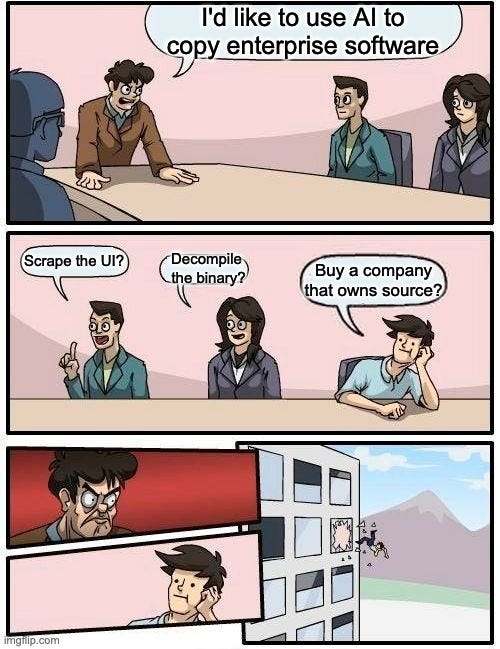
The End of The Effort Moat (Oct 7): From ArtCraft’s Adobe clones to AI-decompiled Melee to SS&C suing its own customer, AI is eroding the last technical barrier to copying software. The last wall was built from effort, and effort is exactly what AI makes cheap.
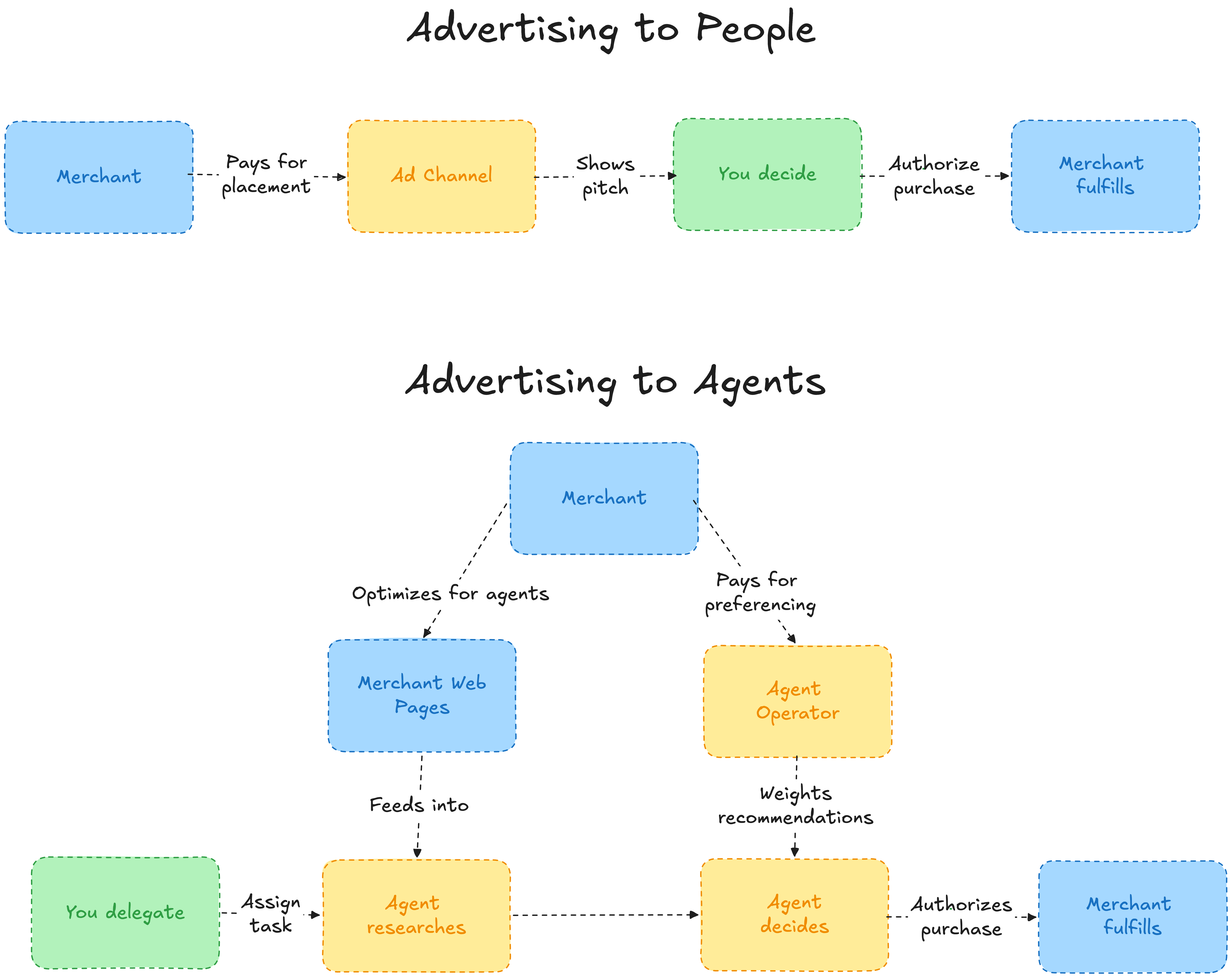
All The Ads We Cannot See (Oct 12): When personal agents do the buying, the pitch goes to the software holding your wallet. From payola to SABRE to Practice Fusion, money always finds the curator, and agents need disclosure rules written ahead of the abuse for once.
Fortune Favors the Fearless (Oct 13): A vaccine-addled distillation of the point solution versus system of record fight, crammed into a few hundred words. The builders need to stop fearing the EHRs; the EHRs need to stop fearing the builders.
Cross-industry Comparisons
Information Blocking Has Entered the Meta Chat (Oct 15): A fintech cut off by Meta cited RTMS v. PointClickCare, and Meta’s lawyers explained exactly why that precedent doesn’t travel. Outside the Cures Act, a platform controls its own data by default; inside it, the burden flips.
Other News

Lost in Hiring Translation (Oct 26): Job listings share one vocabulary but speak a thousand private dialects, from the four species of PM to the two flavors of remote. Figure out the two or three things that would make you miserable and derisk those first.
A Friend Looking for Her Next Thing: A research and insights leader with 10+ years from Google to mid-stage startups, ready to start or scale an insights or UXR function at a health tech company. If nobody on your team owns “what do our users actually need,” DM me and I’ll make the intro.
External Media
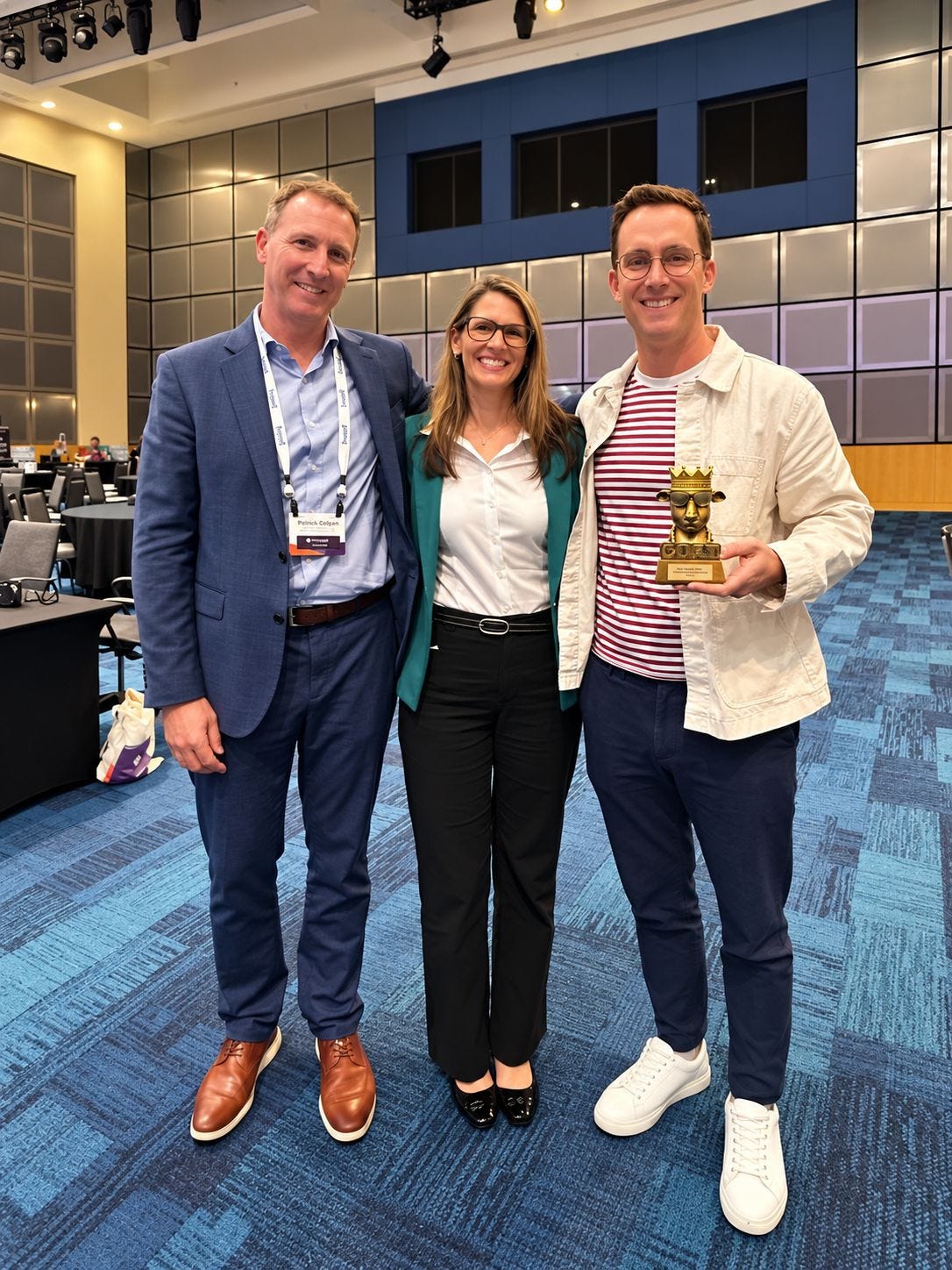
Interop Jeopardy at the CommonWell Fall Summit: I took home the first-ever Interop Jeopardy trophy against Katie Kurfirst and Patrick Collyer, with Courtney hosting. Round two is promised for next year, so the title defense starts now.

eHealth Exchange Annual Meeting: A cowboy-themed panel with Kno2’s Therasa Bell, Freenome’s Michael Marchant, Doctronic’s Byron Crowe, and Primary Record’s Jean Ross at Lost Pines in Bastrop, Texas. We yeehawed.
STAT @ HLTH: A Dose of Reality on EHRs and AI: I’ll sit down with STAT’s health tech reporters on the HLTH expo floor on Nov 18, alongside Aneesh Chopra and others. Expect EHRs and Epic.
I’ll also be speaking at RSNA in Chicago and the Digital Health Counsel in Seattle in December.
Posts I Liked
Referrals Still Run on Fax: Nikhil’s Out-Of-Pocket deep dive on why referrals still run on fax and how Medsender is putting AI on top of the queue. Good post by Nikhil (and thanks for the fax network shoutout).
Healthcare’s High-Stakes Courtroom Battles: Heather Landi’s Fierce Healthcare special report on the lawsuits shaping policy, from 340B and MA star ratings to Epic antitrust and OpenEvidence v. Doximity. Good article by Heather, who was kind enough to point readers here for the deeper dives.
Affordable Integrations at PointClickCare: Magicare’s Daniel Schoenbrun met PointClickCare leadership at NIC to press for affordable integrations, days before announced price increases take effect. A callback to our PCC RPA coverage, with Magicare offering its own APIs at no charge.
Pharmacist here, so I'll admit my eyes glazed over at the marketplace strategy taxonomy — until Clara showed up. Prior auth is where I live. The fax-and-phone purgatory between the counter and the prescriber is still the single biggest source of delayed therapy I see, and it's almost entirely a documentation problem: the indication, the failed alternative, the lab value, all scattered across systems. What made your 'strategy credit' section land for me is that the vendors with the broadest APIs have the cheapest path to fixing exactly this — not a scheduling agent, but one that assembles the prior-auth packet from USCDI medication and condition data in one pass. Your warning that agents will scrape the UI for whatever the APIs don't cover reads like a description of my average Tuesday: third-party benefit tools brute-forcing payer portals because the sanctioned path doesn't exist. 'Knighting the bots themselves' is the right frame. In pharmacy, the bots are already here — they're just unsanctioned.